Recipe: Cauliflower Rice with Steamed Fillet of Salmon
Welcome to our low FODMAP dinner series, a collection of simple, gut-friendly meals designed with midlife hormone health in mind. If you have already read our guide to FODMAP: everything you need to know, you will know that many of the bloating, discomfort and energy dips women experience in their 40s are not just "getting older", they are often signs that the gut needs a little extra support.
Gut health and hormone health are closely linked. When digestion is under strain, it can affect how well the body processes oestrogen, manages inflammation and absorbs the nutrients your hormones rely on. That is why, alongside our hormone and metabolic programmes, we like to share dinners that are genuinely easy to make on a weeknight, kind to a sensitive gut, and still full of flavour.
This week's recipe is a light, protein-rich salmon and cauliflower rice dish, perfect for warmer evenings and easy to prepare in around 30 minutes.
This recipe is perfect for summer evenings in the garden. Jam-packed with Vitamins C, K and B6, cauliflower rice is the ideal low calorie, low carb alternative to standard rice and makes for a light, refreshing salad. Paired with steamed wild salmon, packed with protein, omega-3 fatty acids and vitamin B12, this recipe will be ready in a flash.
Time: 30 minutes
Serves: 2
Calories per portion: 250
Ingredients
1 medium sized head of fennel, finely sliced
1 small/medium sized head of cauliflower
3 anchovies (bottled ones in olive oil)
2 cloves of garlic, chopped or freshly pressed
1 handful of baby spinach,
2 x 150g Wild salmon fillets
1 tsp sun-dried tomato paste
1 lemon/lime, juiced
Sea salt and black pepper
Coriander leaves to garnish
Pinch of dried chilli flakes/sesame seeds (optional)
Method
Spread the sun-dried tomato paste lightly over the top of the two salmon fillets.
Steam for 12-15 minutes or until cooked to your liking.
Meanwhile, separate the cauliflower into florets, pop them in a high-speed blender and pulse for 10 - 20 seconds until they resemble grains of rice. Set to one side.
Warm 2 tbsp of olive oil and the anchovies on a large pan over medium heat.
After 1-2 minutes, gently press down on the anchovies with the back of a spatula until they no longer resemble their original state.
Next, add the garlic and cook in the salty oil mix for a couple of minutes, before adding the shaved fennel.
Cook the fennel over a slightly higher heat, stirring every minute or so until it is slightly crisp and golden brown (5 minutes).
Finely chop the baby spinach leaves, add to the pan and stir through the fennel mix. Remove from the pan and set to one side.
Pop the pan back on the heat, add the cauliflower rice and a couple of tbsp of water to it, and cook for 2-3 minutes on a med-high heat. Season with salt and pepper and enough fresh lime/lemon juice to taste.
When the salmon fillets are ready, remove from the steamer.
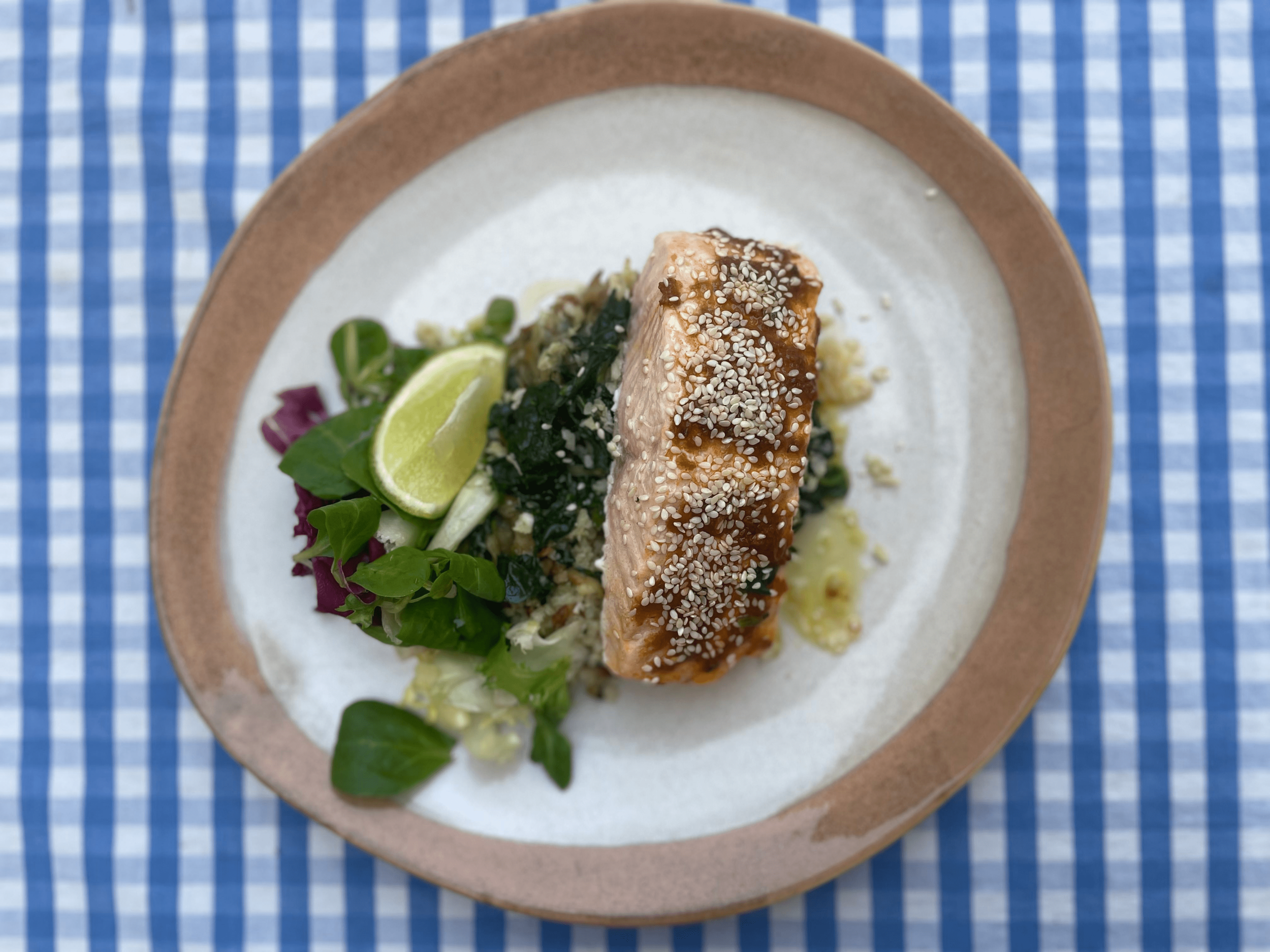
To plate up, add a few heaped tablespoons of cauliflower rice to the plate, top with half the fennel and spinach mix and lay a cooked salmon fillet on top.
Season with a little salt and pepper and a sprinkling of chilli flakes/sesame seeds if using.
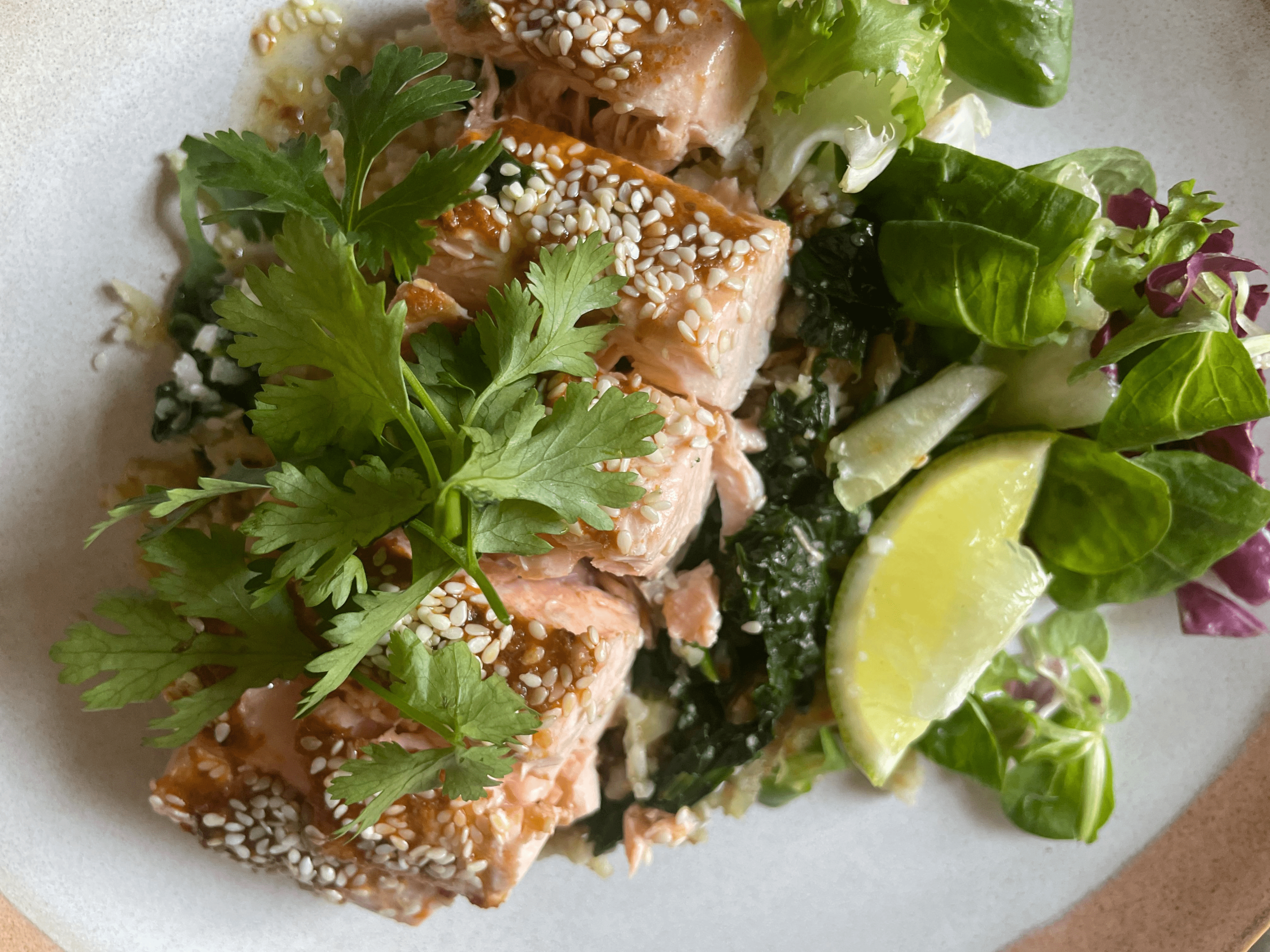
Serve hot, with a colourful side salad and a garnish of fresh coriander and a fresh wedge of lime.
Why this matters beyond dinner
FODMAPs, which stands for Fermentable Oligosaccharides, Disaccharides, Monosaccharides and Polyols, are a group of short-chain carbohydrates that are poorly absorbed in the small intestine. In some people, particularly those with a sensitive gut or conditions such as IBS, these carbohydrates draw excess water into the bowel and are rapidly fermented by gut bacteria, producing gas that leads to bloating, cramping and discomfort.
This recipe is naturally low FODMAP because it avoids common trigger ingredients such as onion, garlic in large amounts, wheat and certain high FODMAP vegetables, while still delivering the protein, healthy fats and micronutrients your body needs. The wild salmon provides omega-3 fatty acids and vitamin B12, both of which play a role in reducing inflammation and supporting steady energy, while the cauliflower rice offers fibre and vitamin C without overwhelming a sensitive digestive system.
For many of the women we work with, gut symptoms are one of the first clues that hormones and metabolism need attention too. Digestion, inflammation and hormone balance are rarely separate issues, they tend to move together.
If you recognise yourself in this, whether that is bloating, low energy, or a gut that feels unpredictable, you do not need to work it out alone. Book a free call with Gráinne to talk through what might be going on and where to start.